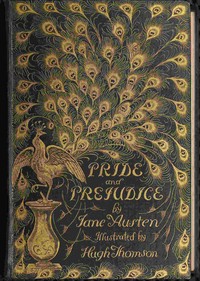
A text goes in one end; a performance comes out the other.
Two small open-source tools do the work, both running on a machine in a spare room, no cloud services and no API keys.
- 01The text
A plain Project Gutenberg edition, fetched by its number. Nothing is rewritten — every word of the book survives, verbatim.
- 02The reading script
gutenberg-reader splits it into chapters and sentences, marks each one narration or dialogue, and works out who is speaking.
- 03The performance
tts-audiobook gives the narrator and each character their own voice and renders the chapters to MP3, one file at a time.
Why podcasts
A podcast app is already a very good audiobook player: it queues chapters in order, keeps your place across devices, downloads ahead of you, and plays at whatever speed suits you. So each book here is published as its own feed rather than as a pile of files.
The player on this site keeps your place too — in this browser, with no account — but subscribing is the version that survives a long commute.
Open, all the way down
The books are public domain, the tools are open source, and the recordings carry no rights of their own. Take them, mirror them, improve on them. If you want to make your own, both repositories document the whole pipeline.